Trends
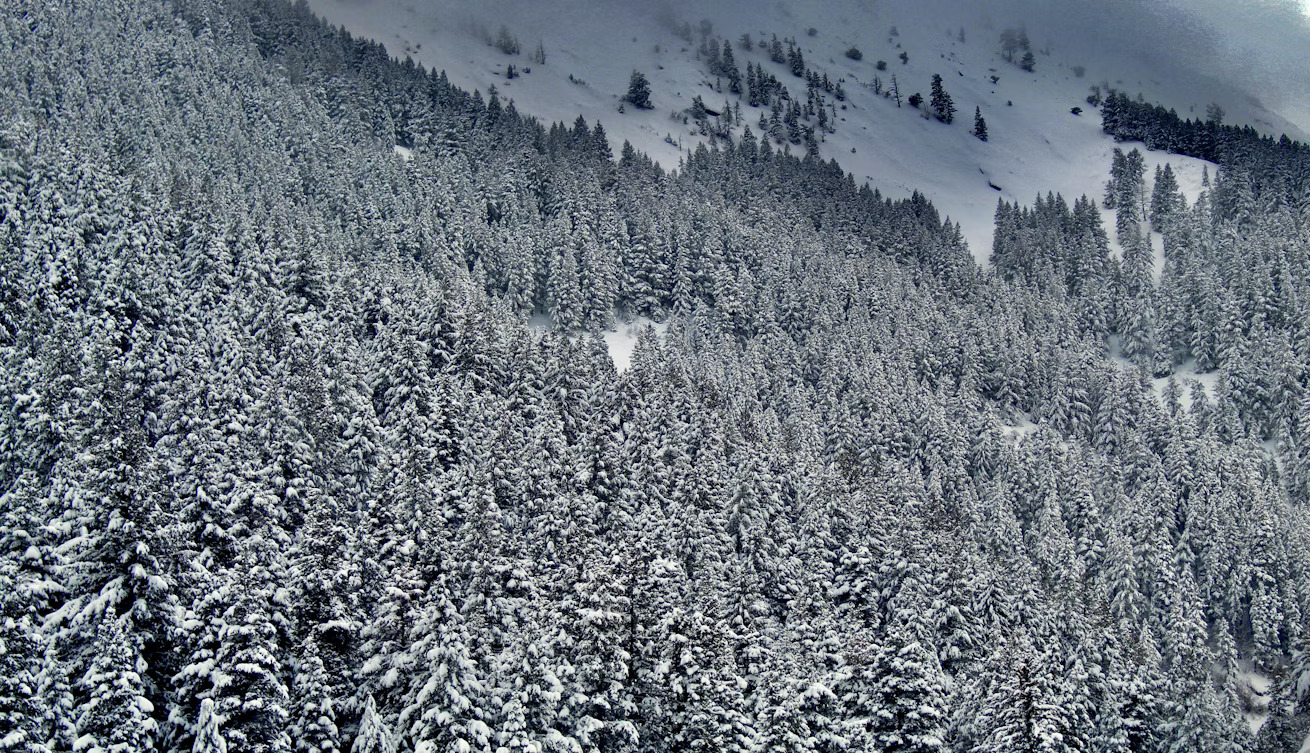
Snowfall picked up during February to provide some relief to western mountain destinations but for the second consecutive month, there were some significant disparities in the amount of snowfall and the resulting impact on winter occupancy between two different groups—Colorado and Utah (CO/UT) and the “rest of the West,” (RoW)—California, Nevada, Idaho, Wyoming, and Montana. In the most recent assessment released by DestiMetrics* last week in their monthly Market Briefing issued by Inntopia, the aggregated data for the 17 participating destinations revealed that the ongoing drought and atypically warm temperatures continued to dissuade prospective visitors from hitting the slopes. And, once again, Colorado and Utah bore the brunt of the downturn although some level of decline is being experienced by most western regions. The economic news was mixed as jobs were lost but inflation remained stable and consumers’ attitudes improved slightly but remain relatively low. Aggregated seasonal occupancy continued to slide as daily rates eased but stayed up and revenues slipped. However, the data also showed that as bookings for winter arrivals slackened, the opposite occurred with bookings from May through August, suggesting that mountain vacations are being deferred, not eliminated.
“In a decidedly tough season for western destinations, there have been some bright spots,” offered Tom Foley, director of Business Intelligence for Inntopia. “The ‘rest of the West’ destinations that had better conditions than Colorado and Utah resorts were able to capitalize on that advantage to slightly improve their occupancy from last month, although that is tempered by smaller rate and revenue gains,” he continued. “And in the ‘good news’ category, we’re encouraged to see year-over-year improvement for summer bookings with what looks to be some pent-up demand for a mountain vacation playing a role for summer bookings made in February.”
Historic actuals for February
Compared to last February, actual occupancy for the entire region was down a moderate 4.1 percent when compared to last February while the Average Daily Rate (ADR) remained up 1.5 percent. But that rate gain was unable to offset the lower occupancy so monthly revenues were down 2.6 percent.
The full winter season
As of Feb. 28, occupancy for the full winter season from November through April across the West was down 5.1 percent including on-the-books and completed visits. This is a further decline from the end of January with declines in all six months of the season. Aggregated rate resilience continued as the ADR was up 1.4 percent but continued to soften compared to last month. Every month but March—down a scant 0.6 percent—posted year-over-year increases in ADR. Again, higher rates were unable to offset the lower occupancy with revenues down 3.8 percent compared to last year at this time.
“Rate resilience has been a good development this season for our lodging partners,” observed Tom Foley, director of Business Intelligence for Inntopia. “On the one hand, it helps to mitigate revenue losses due to lower visitation, but on the other hand, it speaks to the overall quality of the off-mountain product at a time when the on-mountain product has been underwhelming,” he added.
Booking pace during February
The booking pace in February for arrivals in February through July were down an aggregated 1.9 percent in occupancy but four of the six months posted increases ranging from a 10.5 percent gain for February arrivals to a robust 23.6 percent increase for June arrivals.
“Mid-month snow helped give a little kick to bookings for arrivals in February and combined with the summer reservations, kept the booking pace very close to flat,” reported Foley. “But there is no escaping the overall decline in occupancy.”
First good look at summer
Four months of summer data is now available—May through August—with on-the-books occupancy up 3.9 percent compared to the same time last year with increases in all four months. The ADR is also showing strength and is up a strong 7.9 percent for those months with increases in all four. “These are some of the strongest rates for any season that we’ve seen since the early post-pandemic demand spike in 2022 and 2023,” Foley pointed out. “That combination is currently driving an early revenue gain of 12.1 percent which is also higher than any time since the post-pandemic bounce.”
Foley went on to say that “it is great to see this early summer demand, which is helping establish a strong foundation, and is even more important considering recent geopolitical events, which are likely to have an impact on consumer behavior in the coming weeks.” He further emphasized that “getting some of that early revenue locked in before any consumer shocks hit the industry is important for the lodging industry.”
Economic Indicators
There was very little change in the Dow Jones Industrial Average (DJIA) during February, eking out a very slight 0.2 percent gain over January’s closing but it did manage to surpass the 50,000-point threshold on Feb. 9 and hold it for four days before retreating back to 48,9777.9 points at the end of the month—due to concerns about Artificial Intelligence (AI) disruption, ongoing worries about inflation, fewer interest rate cuts, and edgy consumers.
The Consumer Confidence Index (CCI) released by the Conference Board and the Consumer Sentiment Index (CSI) from the University of Michigan both ticked up very slightly with the CSI clawing up from 89 points to 91.2 while the CSI was up a scant 0.2 points. The six-month average for the CCI is now at its lowest level since 2014. Among the CSI respondents, those with stock portfolios were considerably more confident than last month but that uptick was completely offset by respondents without a stock portfolio. High prices were the most frequently mentioned concern in the report.
The national Unemployment Rate and job creation figures both generated concern during February, as 92,000 positions were lost during the month while December and January numbers were adjusted downward as the unemployment rate ticked up from 4.3 to 4.4 percent. In hospitality, the Accommodations and Food Services sector lost 34,700 positions but wages remained steady.
The National Inflation Rate and the Consumer Price Index (CPI) were relatively stable in February with inflation unchanged at 2.4 percent while prices went up 0.3 percent from January. Food prices were one of the most significant contributors to price increases with grocery inflation up 3.1 percent while dining out was up 3.9 percent. Gas prices were up 3.5 percent from January but down 6.5 percent in a year-over-year comparison. This does not include the recent spike in oil prices but does include some anticipatory price pressure about the Middle East situation at the end of February.
Keeping a close eye on
Snow and temperatures continued to hinder slope conditions even with widespread snow across most of the region. But conditions were further hampered by warm weather patterns that impacted snowmaking, trail conditions, and consumer interest and attention on warm weather pursuits in urban areas.
Occupancy and demand booking pace had big swings between the regions. For the West in aggregate, the occupancy booking pace was down 1.9 percent compared to last February and marks the fifth consecutive decline in occupancy pace. But a comparison of the two sub-regions reveals dramatic differences. While both CO/UT and the RoW saw improvements during February, the CO/UT region experienced a sharp 19.4 percent year-over-year decline in booking pace as the drought deterred skiers and riders. Meanwhile, the RoW recorded a 22.3 percent year-over-year gain driven by “better than” but not outstanding conditions.
The dollars and cents of winter demand reveal that 109,189 nights were booked in February for arrivals from February through April which is a stark 15,477 fewer nights booked than last February—a 12.4 percent decline. For the second consecutive month, ADR for all bookings made in February was down–plunging 20 percent and leading to a 30 percent decline in monthly revenue—an aggregated $21.8 million drop.
International visits are still down but improved slightly boosted by an uptick from Canadians. Overall bookings from international markets are down 29.5 percent year-over-year and an improvement from last month’s 34 percent decline. Bookings from Mexico which have been up all winter, weakened in February but remain up 4.3 percent over last year. Western Europe and Oceania were mostly unchanged with Europe down 12.9 percent and Oceania down a dramatic 40.1 percent.
Length-of-Stay lost ground during February, moving down from an average of 3.03 nights for the season as of Jan. 31 down to 2.83 nights as of Feb. 28.
Booking lead-time extends as the focus turns to summer months. Arrivals for February got a modest boost but most transactions were for May and beyond with reservations being made just shy of 50 days before arrival compared to a 37.8-day lead-time recorded last year at this time.
Rates for Economy and Luxury properties edge up slightly while Moderate properties slipped. Economy properties, up to $400/night, eked out a 0.4 percent gain in daily rates, while the Luxury category at $750/night and up, edged up 1.4 percent. In contrast, the Moderate category priced between $401-$749/night, dipped 2.2 percent in a year-over-year comparison.
“There’s no denying the industry has been grappling with some grim readings this season, but there are a couple of bright spots in the data,” commented Foley. “While snow conditions haven’t delivered what visitors expect and depend on, daily rates have remained fairly resilient and able to mitigate some of the impact of lower occupancy,” he continued. “And we can’t forget that the rest of the West region is having a pretty good revenue year, largely driven by better snow conditions than were available in Colorado and Utah. And looking ahead, we are seeing a strong and optimistic start for summer bookings—despite continued inflation, job concerns, and geopolitical turmoil around the globe,” Foley concluded.